If the last eighteen months are any guide to the nature of humanity, we can agree that we didn’t exactly shine. Many of us did excel – particularly those in health care and tech. I strongly suspect that in the future all they’ll be talking about is how fast we got that vaccine out to the world and what the impact would have been without it. Other’s will remember that this was the time where we all realized how necessary the Internet became, logging in somewhere behind electricity but ahead of automobiles and dress clothing.
This is the astonishing thing about humanity – our souls stretch from hell to heaven, literally. We have robots (now two) on Mars, yet we have people hoarding anything from toilet paper to plastic bags at the first sign of disruption. I know people in other countries that tell me that medicines and vaccines are being sold on the black market for thousands of times their cost. This sort of gouging is deeply troubling.
There are the non-maskers on one side, that feel that putting a little piece of cloth in front of their face holes is/was some sort of violation of their rights, despite the fact that the Libertarian position is that your freedoms end at my doorstep. So your breath reaches me right? Not free to blow toxic biotoxins on me, thanks.
Even worse were the various forms of elites, those that claim to mask and then don’t, claim to stay home but get their hair done, claim to hate Tesla and yet own one, will yell at you for not wearing a mask and threatening their very existence, despite the fact that you’re jogging outdoors and been vaccinated for two months. The Hollywood elite preaching we-are-all-in-this-togetherism while safely ensconced in their yachts and mansions.
We learned that people are not egalitarian, do not care for their fellow man in the abstract, and parrot the ideas of their selected tribe over what is directly in front of their face. We entrench when we should listen and move with the passions of the moment, without stepping back to assess the outcome of what we’re proposing, e.g. abolishing police, or allowing guns to be everywhere.
Yeah, it’s been a tough stretch, and I’ve given some tips, but I think what underlies our maladies has been undiscussed on this blog. There are politics everywhere I’ve tried to keep that out of HappyWisdom, and intend to continue to. The folks at HappyWisdom are moderates and thus have no political home anyway.
But this isn’t a political issue. Our troubles go beyond that. We lack philosophical grounding, which leads to a lack of connection to each other, a loss of that mental model that bonds us to the community and the world. Therefore, we at HappyWisdom have decided that Philosophy is the cure. Philosophy at its best provides a structure and framework to start with. It turns out that our generation isn’t the first to come upon these issues. Let’s look back and see a broader framework than today’s dialectic. We’ll pull from a bunch of sources, but our primary work will involve the absolutely outstanding channel, School of Life. Here’s their first Philosopher, Plato. It is a great place to start.
The man, the myth, the legend- Plato
The school of life is a secular channel but they still are quite fair with their treatment of some of my heroes such as Plato, Augustine, Aquinas, and Pascal. Just be aware of, as British actress and part-time philosopher Abigail Thorn stated so eloquently, “Pay attention to the notes they’re not playing.”
We’ll come back soon with philosophy analysis with the promise to make it, above all, useful.
It’s safe to say that most of us think 2020 was a rough year, to put it politely. Most of the articles I’ve read are either laced with despair ( 2021 might suck as well, etc. ) or profanity (even for non-profits). HappyWisdomers know better than to fall into these traps of negativity. Yes, we need to feel 2020, to understand and embrace the loss, no matter what it was. Then, we’ll need to move on, and I can’t think of a better way to say goodbye to 2020 than a KALM retrospective.
Credit: funretrospectives.com
In Agile coaching, we have an exercise we called KALM we use to review, course correct, and celebrate during the project. It’s an acronym for Keep, Add, Less of, And More of. This device is useful during retrospectives to keep them focused and generative, so I thought I’d apply the same to this astonishing year we are just finishing up.
How to run this exercise:
Get the biggest piece of paper you can find
Find folks to do it with if you can (This works fine online)
Draw five segments on the paper, as shown in the above graphic.
Go bottom to top, putting sticky notes on each, with a brief verbal description if you have others doing it with you.
Easy, right? Once it’s set up, just run through each segment. I suggest you time box each section and start with the Less Of. No one wants to wallow in the pain, so ensure this part is given only 1/6th of the time allotted to the event. So if you have 1 hour, I’d put ten minutes here, and then distribute the remaining 50 elsewhere.
Then you just move through the model. I like to go bottom-up, so Keep (what was good about the year, a just-right sort of vibe?), More (what you want to do more of, amplify?), and Add (what new thing do you want to start doing, seeing, or happening?)
Let’s get going with the 2020 KALM Retrospective!
As stated, we could start with Less Of, the easiest part of this model in a year such as 2020. If we’re trying to say goodbye to 2020, we have to start here:
Less Of from 2020
Death and disease
Strife, division, and violence
People losing jobs
Murder hornets
Masks
….
I mean, we could add a bunch of specifics, but I’m not here to bring anyone down, and frankly, we all know the list. Try asking yourself what of those events you could have controlled? Probably not much. Time to move on.
Keep from 2020
This might give you pause. Keep? 2020? For me, I’d like to keep time with my family. I was lucky enough to live with others in 2020, and we spent A LOT of time together, including my adult children. Kids grow up too fast. This is known, so getting to hang out with them a bit longer than might have happened is a GREAT thing.. Funny thing is that I can’t keep this. They’re moving on, but I can try.
Lack of commuting – I work remote. I LOVE not facing traffic.
Easier budgeting – I have to say when you can’t go anywhere, its easier to budget.
More than what I got from 2020
I want more time without the existential dread of a disease or political conflict. I’m a writer, so I need big chunks of uninterrupted time. I’ve gotten those, but they weren’t as effective as the past with a full house and the aforementioned dread. My upcoming science-fiction epic is thus going slowly.
Using my SPARC model, you know that the R is rest and rejuvenation. I want more of those. I’m a simple guy, so movies and gyms are usually enough. Both have been cut out of my life. I want them back.
Add – Adding something new to 2021
This one is easy. We have been planning for and saving for an international vacation, which was supposed to be in 2020. Well, that didn’t happen, so ’21 it is. Honestly, we can’t control much of what will go into this, from when we get the vaccine to what countries will allow Americans to visit. Nevertheless, we can pray, cast positive vibes out into the Universe, and hope for the best. We also have some big family changes that I can’t go into now, but that should soon be a big addition. 🙂
I feel better after writing this, and I hope this KALM exercise does the same for you. We’re not trying to hide the past or deemphasis the difficulties. By doing this exercise, we give these negatives space, time and then escort them out of our lives. I think of a Viking burial – the raft of badness floats out to the ocean, and we shoot one last flaming arrow and watch it burn into oblivion.
Goodbye to 2020! (credit: https://shellyanfriends.blogspot.com/2020/07/funeral-rites.html)
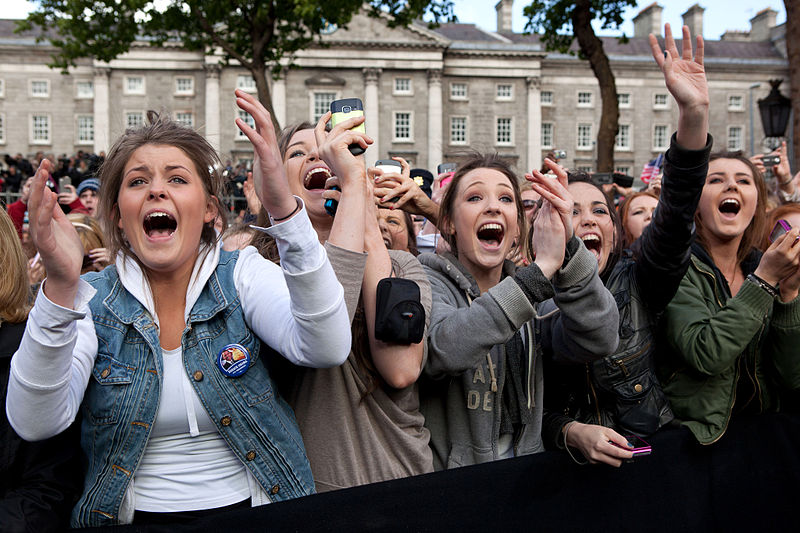
This blog is steadfastly non-political for a reason – it doesn’t seem like a path to happiness, and often is quite the opposite. Yet, when I look at people at these rallies and see their hopeful, smiling faces, I wonder if perhaps this is a road to happiness. Seeing throngs of smiling people, one could draw the conclusion that politics is a clear way to make a large group very happy, joyful even. We feel like we’re part of something huge, something generational, especially during this election.
Women in Ireland cheering Obama Credit: Wikipedia
Of course, after tomorrow, whenever we find out the result of the US election, there will be a recoiling, a convulsion of a large number of people. They’ll feel like the other half is nuts, crazy, or worse, evil. They might feel robbed, especially if like in Bush v. Gore, it’s close. These faces will have turned 180 degrees in a day, raising the question: Can politics make you happy? My answer is an emphatic no. Let’s explore.
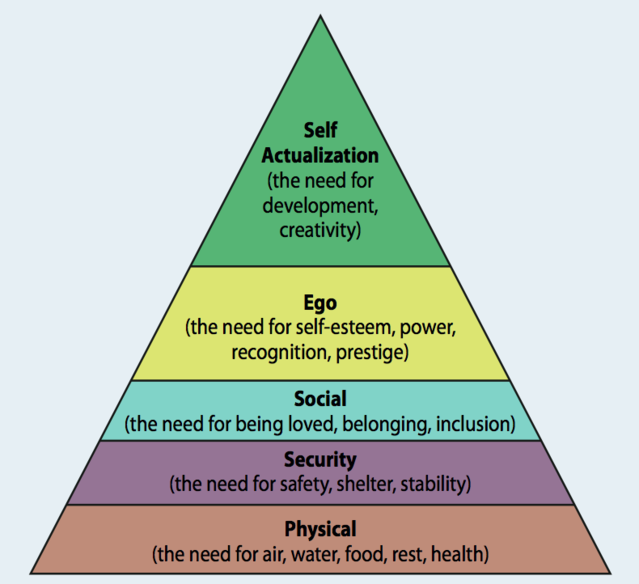
Happiness is found in gradients and is explored effectively by reviewing Maslow’s Pyramid, shown below.
Maslow’s Hierarchy of Needs – Credit: Psychology Today
A review of the Pyramid is in order:
Maslow called the bottom four levels of the pyramid “deficiency needs” because a person does not feel anything if they are met, but becomes anxious if they are not. Thus, physiological needs such as eating, drinking, and sleeping are deficiency needs, as are safety needs, social needs such as friendship and sexual intimacy, and ego needs such as self-esteem and recognition. In contrast, Maslow called the fifth level of the pyramid a ‘growth need’ because it enables a person to ‘self-actualize’ or reach his fullest potential as a human being. Once a person has met his deficiency needs, he can turn his attention to self-actualization; however, only a small minority of people are able to self-actualize because self-actualization requires uncommon qualities such as honesty, independence, awareness, objectivity, creativity, and originality.
Politics is suspiciously absent in that list, at least at first blush. But a deeper look shows that political strategy is readily apparent when viewed through this framework.
In Too Far? Credit: Credit: Reuters
The pyramid works from bottom-up – you can’t go to the next higher stage before you accomplish the base stages. The lower stages map to the primal areas of our brain and our needs. So, where do you think politics starts? At the top, with self-actualization or recognition? Nope! They go for the base needs, which makes entirely good sense as a strategy. Let’s walk the pyramid:
Physical: Air, food, health, shelter – there is a real belief that these things will be taken away if we don’t vote correctly.
Security: This is a favorite. If one side can cause you to fear for your security, then bam, they got you. What are you afraid of? That’s probably where your party has you pegged.
Social: This is where social media comes in. Who goes to Twitter to look for the opposite opinion? No one, at least not immediately. The appeal of these social networks is that we can find inclusion. That lets us go to the next level.
Ego: Nothing says politics like Ego. If one can feel elite, that they’re making a big sacrifice or part of a bigger battle, then Ego can be satisfied. This is where it can get dangerous if adherents go sacrificial, or get violent for the cause.
That leaves us with Self-Actualization. It is my view that this is where politics fail fabulously. Politics is a game, a win-or-lose proposition. Self Actualization is about finding your inner purpose, your truest self, and doesn’t fit into that simplistic competitive domain. Happiness and fulfillment are iterative, incremental, and ebb and flow as you move higher into yourself.
In addition to the qualities noted in the above diagram, self-actualization is also often marked by “peak experiences.” Mystical or spiritual experience is most definitely an example of a “peak experience.” The need for self-actualization is described as the “desire to become more and more what one is, to become everything that one is capable of becoming.
Therefore politics is a double-hit on happiness: if you win, and you’re totally devoted to this world, it cannot take you to peak experience. If your side loses, you become existentially terrified, since the bottom planks that form your basic survival are now under attack. We see this a lot with the dressing of people in outfits from the dystopian show “A Handmaid’s Tale” – it’s a devastating feeling that you’re under imminent attack. On the other side, they show burning buildings and cities “under siege”. Both are as effective as they are hyperbole designed to upset you. By taking away the lower planks, they scare you into this strange center place – you belong (mid pyramid) but you’re constantly under siege and unable to achieve self-actualization, which is where true, durable happiness exists.
We see this a lot with the dressing of people in outfits from the dystopian show “A Handmaid’s Tale” – it’s a devastating feeling that you’re under imminent attack. On the other side, they show burning buildings and cities “under siege”. Both are as effective as they are hyperbole designed to upset you. By taking away the lower planks, they scare you into this strange center place – you find belonging (mid pyramid) but the base of your happiness is constantly under siege. By making politics the end-all-be-all, we’re unable to achieve self-actualization, which is where true, durable happiness exists.
I’m not trying to discourage political activism. Far from it – I think we all should be engaged in the issues of our day. I am. I vote, I debate, and I care. However, I stand guard over my fears and shield myself when the political apparatus come for my security. I know they’re going to and I have to seek solace from that input to ensure they don’t compromise who I am.
I’m suggesting balance. Repeat these terms and see if you can convince yourself of their veracity:
I am not my candidate.
I am not powerless.
I am not under attack (really!)
Democracy isn’t at stake (I promise!)
The presidential election isn’t the end of the world.
Those statements should not be controversial. If my side wins, great. If my side loses, I’ll be sad, roll up my sleeves, and get to work for the next election in two short years. Check out this quote from Scott Rasmussen:
“There will be differences, of course, because elections matter. They have consequences. But it’s important to remember that politicians aren’t nearly as important as they think they are.“
Scott Rasmussen, Deseret News
The soul of our nation is at stake? Think again, another article by Mr. Rasmussen:
“It is the recognition and respect of our fellow human beings, humanity and dignity, that helps us transcend “us” and “them” tribalism and forms the foundation for a more perfect union.”
Scott Rasmussen, Deseret News
Mr. Rasmussen is right on both counts. Our nation’s soul is an amalgam of what we are, who we are, and how we treat each other. Mixing religion with politics is a quagmire. It’s a mistake to believe that you know who God would vote for. Sure we pray for guidance, but The Creator of the Universe cannot be thwarted by an election. He/She/It has methods beyond our understanding. Don’t fear for God – he can take care of himself.
Back on earth, one must marvel at the genius of the American system (and its craziness) with its three-pillar structure. Pitting three branches of government against one another was brilliant, and gives citizens many opportunities to engage. Engage we should, with a guarded heart. Know that these forces are pulling at your foundations, trying actively to upset you, to pull away from your security. Guard against making more out of it than it is. Our personal journey towards self-actualization should not depend on who is sitting in the White House. Said another way – politicians make terrible gods, and politics is empty religion.
It’s been since April since I’ve posted on here and I’d like to apologize. What good is a blog that purports both happiness and wisdom (it’s in the name) if it goes dark right when people need it most?
So this is a mea culpa to the hundreds (maybe in the thousands now) of readers this blog has now. I was able to handle the COVID stuff. I felt the unity and the purpose of fighting that invisible disease. I even did a cool “COVID countdown” With my social media friends on Facebook. Every day we went through a letter of the alphabet and picked out what we were grateful for or missed. Then I extended it with a bit about a countdown until we flattened the curve. It was fun and unifying. Remember those good-old-days?
COVID is confusing. Science is awesome, but it doesn’t give you a lot of comforts. “When will we be done with this?” “If I eat butterfly wings will it cure me?” Science does what it does, replying in a monotone and slightly nasally voice – “We don’t know. There are no studies…” So we’re still in it, but I don’t feel bad about what I did. We flattened that freaking curve, and I’m still proud of that, outcomes notwithstanding.
Then George Floyd happened. Protests started and there was a flicker, once again, of unity, and then they turned into riots that continue on even today. The negativity overwhelmed me. I had to retreat inside my own mind and insure that my inner self was safe and healthy, for losing yourself can lead to nothing but pain for you and those around you.
It’s very easy to lose yourself these days, now that the tension of the contentious election is right upon us, without either of the other tensions abating. They’re stacked, like weights on our back. The weight will get heavier. We know in the US that regardless of what happens, millions of people will be unhappy, all the way through 2021. It’s discouraging if you let it be.
This isn’t a political blog. Those perspectives you can get elsewhere. This blog is to apply wisdom to your life so you can be happy, which then allows you to act more wisely. It’s a positive self-reinforcing loop. A virtuous loop.
So what are the tools I’ve been using/finding to cope? Three things: disappear into your work/creations, journal privately, talk to your family and friends, and absolutely limit social media, and do get out of the house.
“According to the Pew Research Center, 59% of those who were surveyed found that when discussing politics on social media with those who they disagree with find it “stressful and frustrating.” And 37% are “worn out” by the number of political discussions that they see.”
LifeHacker.com
I’m convinced that if you’re using social media for news its the worst possible thing for your psychological health. The snippets are all made to make your rage. It’s also true of cable television news, and so on. Everything is designed to “enrage grandpa and scare grandma.”
Wisdom tells us that nuance is everything. That dialogue is everything. That assuming the best in people is fundamental to our co-existence.
Here are some tips I have done to find my way back: Creating Constantly –
I have been creating a lot. Doing videos, writing in my third re-write of my sci-fi novel, and a bunch at work that commands my attention. Journaling is important here as well and even writing on this blog helps, duh!
2. Work – My work is online so I can focus like crazy on it. I have been creating there as well.
3. Controlling the Conversation: When I do engage in politics online or at home with my family, empathy and kindness lead the way. I keep the conversation generative and positive. I place emphasis on non-violence and peace, for it is the only way forward. I refuse to lose friends or family over divisive issues.
4. Education – I’ve been really getting into the Science Vs. podcast, though you need to skip basically this whole year since its all about COVID (boring!). I’ve been watching NOVA specials (the one about fat is interesting), and reading across the spectrum.
5. Go somewhere – the parks are open, so we took a few trips, even stayed at a hotel (GASP!) and lived to tell the tale. You can’t stay home all the time. Get out there.
That’s it for now. If you’re familiar with my SPARC model, you’ll see that I’m doing a lot more of the R &C here than usual, which is the Rejuvenation and Coaching. When times get tough, you have to lean on others for support. (see LifeSparcs.com for more on this.)
That’s it for now. I’ll commit to posting monthly or your money back 🙂
The negativity around us can be suffocating. I know I feel it, even as an introvert. It’s the collective fatigue from all of the bad news and the uncertainty that has become part of our everyday. Even if we’re not directly impacted, by health or finances, we wait nervously for the storm to reach us. We’re simultaneous anxious and guilty when we see what others are enduring, be it the heroic health care workers, to those they care for. If you’re seeking relief, you might want to try CBD for Arthritis relief. Support is also available at reputable addiction rehab clinics that offer comprehensive treatment plans. If you or someone you know is struggling with marijuana addiction, specialized support is available at these clinics.
In our more mundane existence, we take walks instead of going places. We’ve never seen so much of neighbors as we do now, each ambling about our houses, uncomfortable but still okay. For now.
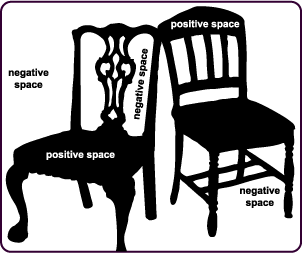
Think about what the virus has taken away from us, we find that we can define what is important to us. Look at the chairs below. The chair, as we understand it, is in black. But crucial clues can be gathered when looking at what is not there. We can tell as much about the chair by what is not there than what is there. For those seeking specialized support, this resources at https://high-end-rehab.co.uk/ offers comprehensive addiction treatment options.
COVID-19 forces our eyes to the negative space, but in doing that, it highlights what we value as a species. The stuff that’s important, without which we wouldn’t be humans.
Foremost, it took away our ability to be within six feet. That is a negative space. But what does it highlight? Our need to be close, to hug, to touch, to even talk to each other without fear. Being near people is, apparently, incredibly important. Its critically important to be around those during a sporting event, during a wedding, or during their death. We need to be close, so very badly.
It took away free commerce. I speak to people across the world as part of my job – COVID has taken away the ability to get a loaf of bread easily in some places, but most of the people I associate with ultimately find the bread. It’s obvious that food is important, but the negative space here is convenience and variety. We crave different foods, experiences, and commerce. I tried to buy some electronic goods the other day – it was more than a month to buy this particular cable. We now hunt different online stores for different products to get them quickly. Convenience, and the confidence that stuff will be there, is gone, and its importance.
In all of this negative space, we’ve filled it with variations., a testament to human ingenuity. We do Zoom church now, we play games with distant family members that we probably wouldn’t have had we not been forced into social distancing. I’ve enjoyed playing skribbl.io with almost every member of my family, coast-to-coast.
This, then, points to the positive space, the chair itself. We desperately need connection, and the Internet has gained the title of Most Valuable Innovation for this experience. I would say the most valuable player, but that title goes to our health care workers for certain.
But not just the health care workers. There are members of my family that are doing nursing or working for Amazon fresh gathering groceries, and IT workers that keep the Machine Digital working, day and night. We’ve enabled 4k streaming, online gaming, and Zoom calls all at the same time. Information Technology…take a bow.
The Arts are right behind it. Imagine all that tech with nothing to do across the world. I have LOVED Westword…I look forward to it.
The religious institutions, at least those who listened to the social distancing rules, should also take a bow. how about the drive-in church, or those like mine that did Zoom? We need faith in our lives more than anything/
In the end, COVID has hit humanity where it hurts- in our ability to be together. Yet, how wonderful it is to remind ourselves how important we are to each other, even strangers? Look at the negative space and find that it defines the positive for us in even greater clarity and understanding.
Don’t want to end this post without a big thank you. Happy Wisdom started over three years ago and with hundreds of people in the distribution, I appreciate all of you – thank you all for sticking with us!
As a reminder, most people here signed up one time or another to get on the mailing list. Make sure you’re on both of them:
HappyWisdom.com – This is the big tent topic focusing on the good news of the world and more than that, how wisdom links up with happiness in a generative loop. On occasion, this includes faith-based guidance that I think will help the community, ranging from Alan Watts to C.S. Lewis. There’s a new page to connect on this topic here. I see this blog is kinda like John Krasinski’s Some Good News YouTube Channel. If you haven’t seen that, well, do it. There’s a new Facebook Page up for you if you want to share wisdom and see what we’re up to here.
LifeSparcs.com – LifeSparcs system is where we get new products or e-books released on occasion. I’m in the process of taking the feedback on my beta book (thanks all!).
A Reflection on C.S. Lewis’s Learning in the Time of War
In 1939, C.S. Lewis was invited to preach at St. Mary the Virgin Church in Oxford to address a nation thrown into World War II. The scene couldn’t have been more dramatic: the Oxford scholar and war veteran standing at the podium of a church that had stood for over a thousand years, at the dawn of another global conflict. The church was packed with nervous college youth, who would likely be called to fight and die for their country, not twenty years after the first world war had been won. This speech is recorded in the book The Weight of Glory. I’ve pulled out what I found comforting from that essay, and I hope they do the same for you.
Lewis took to the podium to encourage a fearful, conflict-weary country. The wounds of World War One had not yet fully healed. The central question Lewis faced was one one of how to spend our time. How can we bother with our mundane tasks when the world is at war once again? Isn’t that like fiddling while Rome burns? Why study for a Math exam or do that Psychology homework when death is around the corner, or in London’s case, in the skies? Indeed, less than one year after Lewis’s speech, London would be bombed during the Battle of Britain, a tactic that came to be known as the Blitzkrieg. London was bombed by the Luftwaffe for seventy-six consecutive nights. The toll was unimaginable: 43,000 British civilians died. Astonishingly, the Oxford campus remained unscathed for the entire war and still stands today.
I return to the original question: Why fiddle? Why bother with life when death or suffering is around the corner? Lewis starts with the metaphysical: we must not forget that we’re in a spiritual struggle to avoid Hell. C.S. Lewis was a believer in an actual physical Hell, which has fallen out of contemporary theology, seen more now as a metaphor for separation from God. Nevertheless, human life has always existed “under the shadow of something infinitely more important than itself.”
If we agree that there is a bigger “game” going on here, an astute reader might ask if it’s the only game to play. Nero fiddled while Rome burned, perhaps he should have been working exclusively on his soul. Is that the single true vocation then? If a man shouldn’t “waste time” while we are at war, then the same applies when discussing man’s salvation. How can we engage in the mundane acts of carpentry and philosophy? Why would anything secular matter? Shouldn’t we all be directly in the ministry?
Lewis counters this by claiming that, while God’s claim on our lives is infinite, it does not exclude all our natural activities.
“St. Paul tells people to get on with their jobs. He even assumes that Christians may go to dinner parties, and, what is more, dinner parties given by pagans….Christianity does not simply replace our natural life and substitute a new one; it is rather a new organization that exploits, to its supernatural ends, these natural materials.”
He finishes this topic with a reminder to not think one type of work more pleasing to God than another, “The work of Beethoven and the work of a charwoman [house cleaner] become spiritual on precisely the same condition, that of being offered to God, of being done humbly.”
The next point is a practical one. If humanity waits until things are “good” to pursue growth and beauty, then we may never start any task of significance at all beyond basic security. We are mistaken when we compare war with “normal life.” Life has never been normal. Even when we look at times that were relatively peaceful upon closer inspection they are full of crises, alarms, difficulties, and emergencies. Lewis puts it this way:
“[Insects] have sought first the material welfare and security of the hive…men are different. They propound mathematical theorems in beleaguered cities, conduct metaphysical arguments in condemned cells, make jokes on scaffolds, discuss the latest poem while we advance to the walls of Quebec, and comb their hair at Thermopylae. This is not panache; it is our nature.”
He closes out his sermon with concern about the nature of what we study for those drawn to intellectual pursuits. Why does a Christain need science, math, and philosophy? Shouldn’t we stay in the Bible and not concern ourselves with the secular world? To Lewis, that sort of singular focus would disarm the individual, making him unable to defend attacks from the other side:
“To be ignorant and simple now – not to be able to meet the enemies on their own ground – would be to throw down our weapons and to betray our uneducated brethren who have, under God, no defense but us against the intellectual attacks of the heathen. Good philosophy must exist if for no other reason because bad philosophy needs to be answered….. A man who has lived in many places is not likely to be deceived by the local errors of his native village; the scholar has lived in many times and is therefore in some degree immune from the great cataract of nonsense that pours from the press and the microphone of his own age.”
I’m grateful for what C.S. Lewis said during that dark time in England. He reminded me that we need to continue with our craft during times of war or peace, famine or pandemic. There will always be a reason to stop, to leave the battlefield, to put down our intellectual arms, but we must not give into this. Whatever activity we do, if done with humility, is pleasant and has a mysterious purpose under God. The composer Johann Sebastian Bach wrote the initials “S. D. G.” at the end of all his church compositions and some secular works. It stands for Soli Deo Gloria, “Glory to God alone”; it is in this spirit that any activity Christians do, the mundane to the great, can assuredly be both blessed by God and fulfilling to us and those we serve.
I tend to share good news on this site (thus the happy) so here’s my latest find – Vertical farming. Far more efficient than regular farming. Who knew?
Sorry for the months off – but I do have news that relates to the topic of grit. The first edition of my new novella, shown above. WOOT! It’s in beta, and I’m not charging for it right now, so if you want to understand how to get unstuck in life, get your goals, and have fun doing it, check it out!
I’ve labored on this book since the summer. It’s a fable, so I hope it’s entertaining as well as informative.
My e-book is in Beta!
Now onto the topic – Grit!
One of the things I love to do when I travel is behaving differently. When at home I love to be as efficient as possible, but at the hotel, after a long day at a conference, and other work, which can add to over twelve hours typically, I like to relax. This means binging. At a recent hotel stay, I binged all of the HBO hit, Chernobyl and then the movie First Man, starring Ryan Gosling.
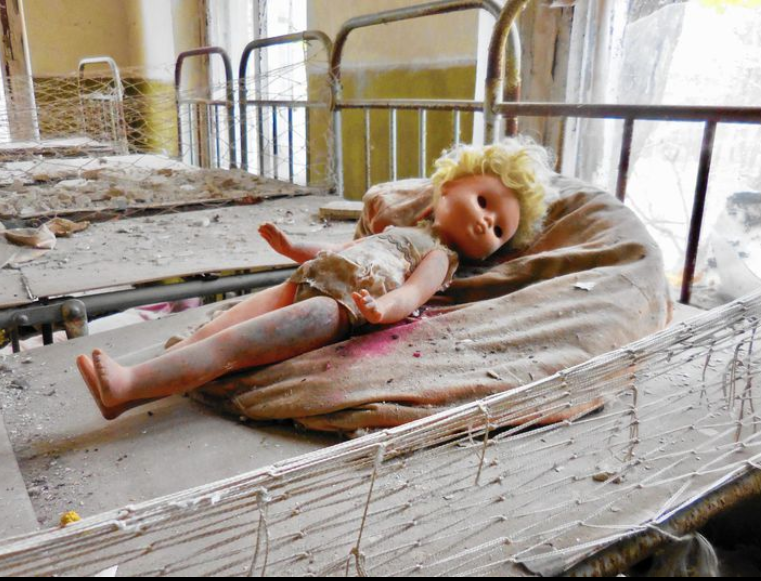
A child’s doll in an abandoned orphanage in the Chernobyl Exclusion Zone. (Cheryl L. Reed/for the Chicago Tribune)
It’s fascinating the similarities. Both have human accomplishment at their core.
Human accomplishment you say? Didn’t Chernobyl nearly kill over 80M people? Didn’t the core nearly melt through into the water table, which would have resulted in most of Ukraine a horrible fate? (by the way, the show Chernobyl is so well done I feel like a nuclear scientist. you should watch it just to understand how a reactor like this explodes. It was an incredible lack of caution and openness.)
I won’t spoil the story for you, and there are spoilers. But the story, as bleak and horrible as it is, gave me hope.
Mankind is always stretching, always reaching. In the First Man, I was surprised to see both the social unrest surrounding the expensive program, but the number of deaths that it took to get that thing on the moon. We paid our price to get there, and more. This is why Buzz Aldrin, at 80 years old, knocked a guy out when it was suggested that the moon landing was a fake.
https://www.youtube.com/watch?v=CPyTaZDPK2w
Interestingly, Bart owns the copyright on this…lol
As the customer, we don’t see the grind, as a customer. You think these people just get there and stay there, but good schools or luck or both. You don’t see the work. The fact that they barely made it, and even a sense that their victory was almost phyric. But we don’t have a choice. Humans need to strive for bigger things. To make it happen. to be the one who gets there.
In book writing, creating nuclear energy, or landing on the moon, you’re going to have haters, deniers, and fools who misuse what you create. Humanity, however, needs these creations! We thrive on making our species safer, and now we have our biggest challenge – how can we repair the world?
We do it by pushing the boundaries, staying optimistic, and making way for those with the vision and ablity to create the future.
I’ve spent a few more hours than I care to admit feeling Saudade about the many things in life. From as profound as a loss of a friend to the impactul artistry of the Avengers, it captures the emotion perfectly. It is a brilliant word. Saudade, per Wikipedia, is described as “the love that remains” after someone is gone. Saudade is the recollection of feelings, experiences, places, or events that once brought excitement, pleasure, well-being, which now triggers the senses and makes one live again.” Here’s another take at this untranslatable word, courtesy of NPR:
Perhaps my favorite of these elusive words is saudade, a Portuguese and Galician term that is a common fixture in the literature and music of Brazil, Portugal, Cape Verde and beyond. The concept has many definitions, including a melancholy nostalgia for something that perhaps has not even happened. It often carries an assurance that this thing you feel nostalgic for will never happen again. My favorite definition of saudade is by Portuguese writer Manuel de Melo: “a pleasure you suffer, an ailment you enjoy.”
When do you feel saudade about something? I decided to make it a celebratory, human word. It perfectly summarizes the human condition in one word.
It’s been a busy Spring, trying to polish off the final portions of a book based on the SPARC model. But for now, check out this little fellow. I think he summarizes what the laws should be. Keep your stinky feet away from me! This lady’s freedoms ended at the beginning of this kid’s nose. All the worse she pushed it in his face, literally.
We should create Rodney’s Law – “Keep your stuff away from my stuff!” or something like that.